
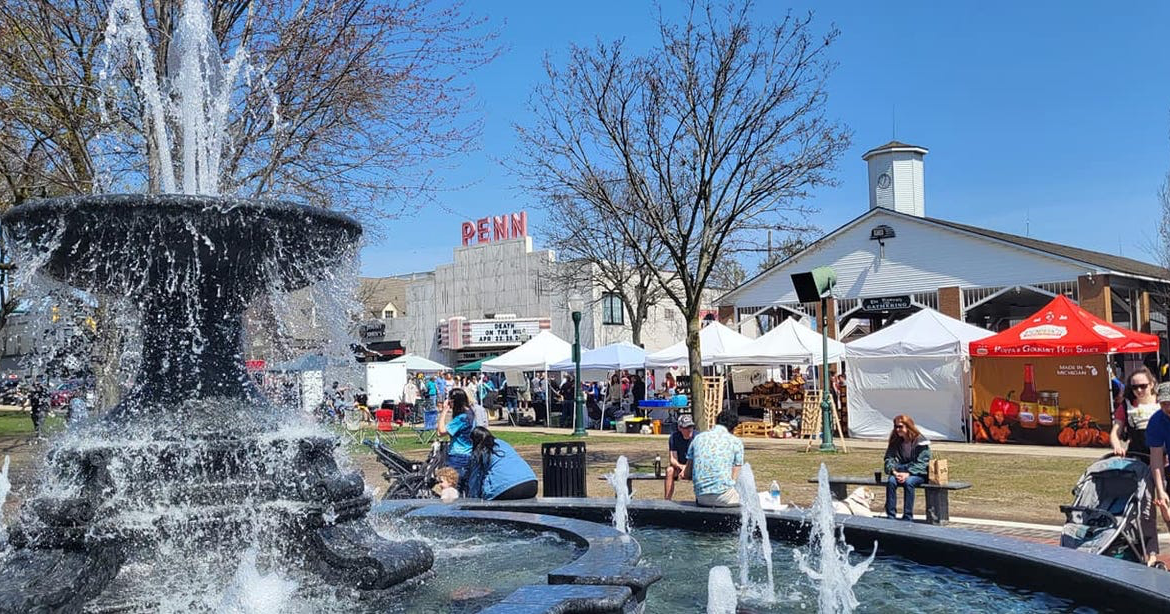
Welcome back and a warm welcome to the new subscribers!
At YIMBY Plymouth we have one simple goal—bringing more housing to Plymouth. We believe that when excessive and outdated regulations are reformed, property owners and builders can best meet the demand for more housing. Examples of the types of additional housing we'd like to see in Plymouth are backyard accessory dwelling units (ADUs), smaller houses on smaller lots, duplexes and triplexes permitted in more areas, and multifamily buildings.
We hope you'll agree that our mission is neither extreme nor unfamiliar to Plymouth. We are not proposing high rises or working against single family housing (we want more of that, too!), but we are advocating for more of everything else that already exists around Plymouth.
In this edition we will: (1) give an update on our day at the Spring Artisan Market; (2) share the time and place of our next meeting; and (3) respond to some common myths about the housing bills introduced in Lansing.
Spring Artisan Market
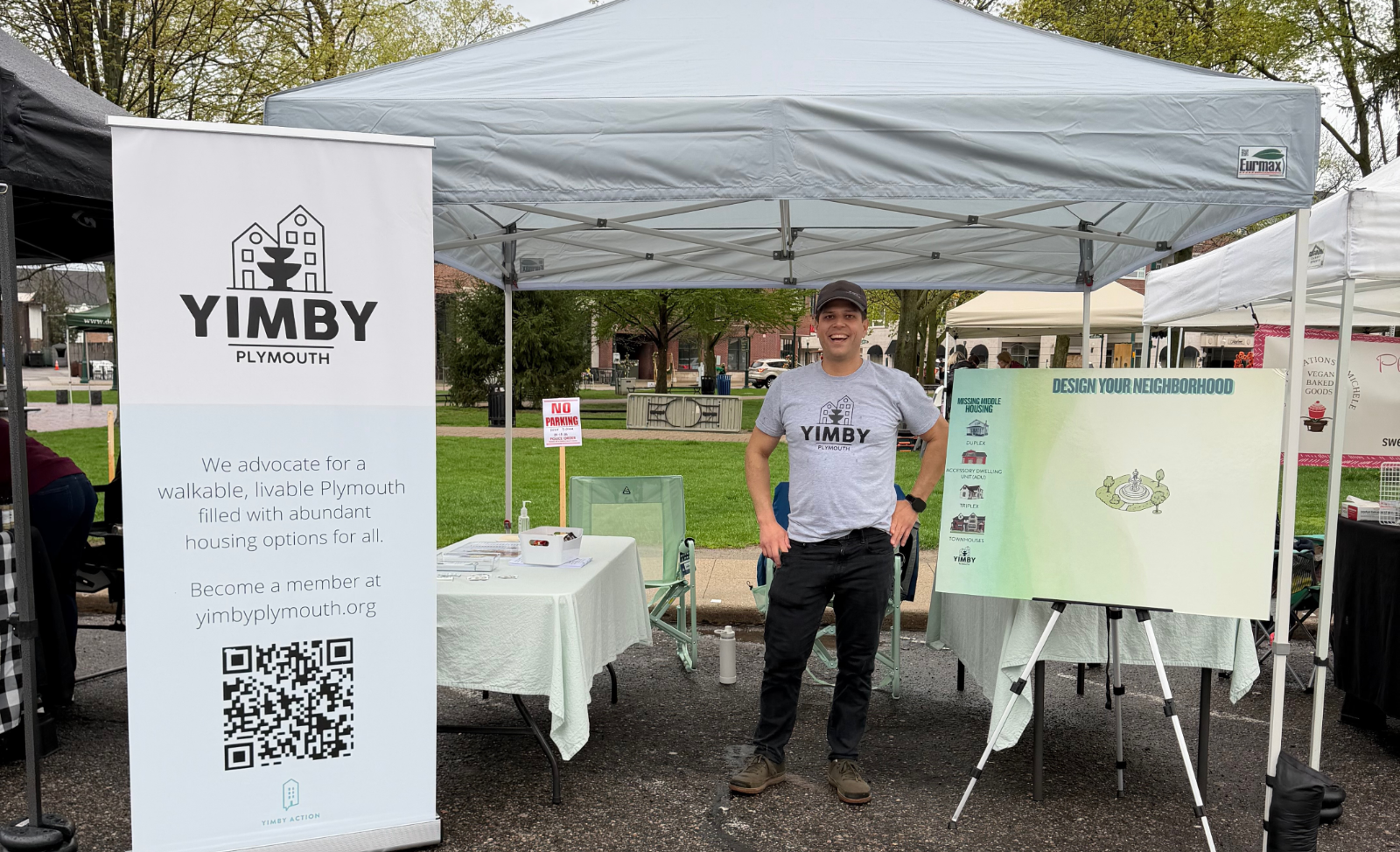
We braved the wind and rain over the weekend to get the word out about YIMBY Plymouth at the Spring Artisan Market downtown.
The response was encouraging. Despite the showers, we met many residents who are interested in bringing more housing options to Plymouth. The most positive feedback was regarding ADUs and smaller houses on smaller lots. We also opened some eyes to the fact that options like duplexes and triplexes exist in many Plymouth neighborhoods but aren’t allowed as new builds in much of the city (and are disappearing over time).
Some perspectives we heard from our fellow Plymouth residents:
- ADUs would help with disabled family members, aging parents, adult children who haven’t yet left home, or as a guest house for visitors. Several folks were surprised that these aren’t allowed already.
- Multiple visitors mentioned how they’re concerned about recent new construction leading to a single (large) housing type, or how cultural and economic diversity within town is increasingly at risk as we lose affordable housing. We also heard about the importance of modest housing for various scenarios (not just for young families, but also 1-2 member households, and empty nesters).
- A few people started out negative about new housing developments but when we got to the bottom of their concerns, we realized that they want specific issues such as parking, design or affordability addressed. We see opportunities both for education and for housing proponents and builders to put their best foot forward when advocating for more housing options in Plymouth.
We hope some of our new connections will join our future efforts in Plymouth. You don't have to agree with us on every point to be involved. And please let us know if you have ideas for other places we should table to spread the word about YIMBY Plymouth.
Help Wanted: Michigan Housing Readiness Bills
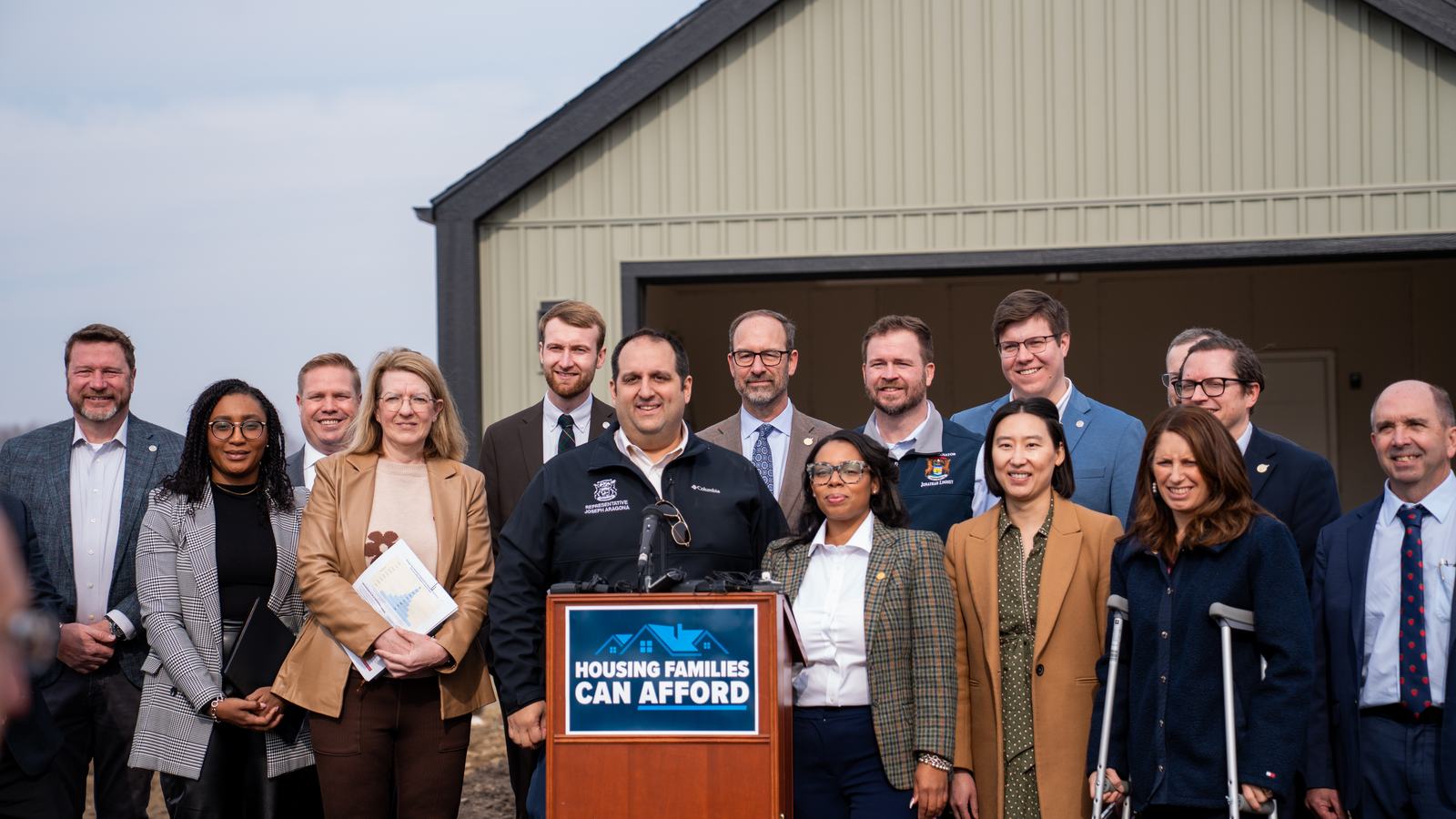
The package of state-level bills (Housing Readiness Package) continues to be debated in Lansing. These bills would eliminate some standard barriers to building more housing. They allow for accessory dwelling units (ADUs) and duplexes in existing residential areas, lower minimum lot size and lower minimum square footage requirements, reform the current re-zoning protest process, and add a 60-day deadline for site plan review.
The opposition to the bills has been loud, but a large coalition of groups has formed to support the bills. These diverse organizations represent and advocate for community, business, industry, environment, and politics, showing how stakeholders often at odds with each other are working together to further these bills.
Here are responses to some of the myths being sold by the bill opponents.
Myth 1: The state bills remove local control and undermine democracy by taking away local votes on zoning.
Fact: The bills preserve public hearings, Planning Commission authority, and local votes, while also strengthening private property rights. The bills impose minimal, consistent statewide standards, which lead to predictable outcomes. Some state oversight is appropriate given the statewide housing shortage of 115,000 units. In fact, as of 2026, the average age of a first-time homebuyer in Michigan is 40.
It is natural for local officials to guard their authority, but remember the only reason local governments have any authority to create and enforce zoning ordinances is because the state delegated that authority to them through the Zoning Enabling Act. It is entirely appropriate for the state to modernize that Act.
Myth 2: Cities will deal with infrastructure concerns as a result of these bills and homes will become less safe.
Fact: Building code and safety requirements remain unchanged. Local governments retain review authority. If the infrastructure truly cannot handle a project, the local government does not have to approve it.
Myth 3: The Housing Readiness Package will change the character of my neighborhood.
Fact: Local government retains authority to impose reasonable aesthetic requirements to preserve neighborhood character. Moreover, most property owners like their houses as they are and won't change anything. Some may choose to build a backyard ADU or replace an aging home with a duplex, but change will be slow. That's exactly the way neighborhoods are supposed to grow and change over time. No one is forcing owners of single family homes to make any changes against their will. Instead, the bills give homeowners the freedom to enhance their properties if they choose.
Your voice is needed:
Lawmakers in Lansing need to hear that Michiganders support these reforms. Over the last three years, the median home price in Michigan has increased by $40,000. Legislators need to correct the policy choices that are putting homeownership out of reach for so many. Please reply to this email to learn more about how to get involved, or write to your state representative and state senator.